A First Look Around an Empty Stadium
An empty stadium reveals its scale through structure, light and seating. Learn how a short observation walk can explain why the same stand feels different.
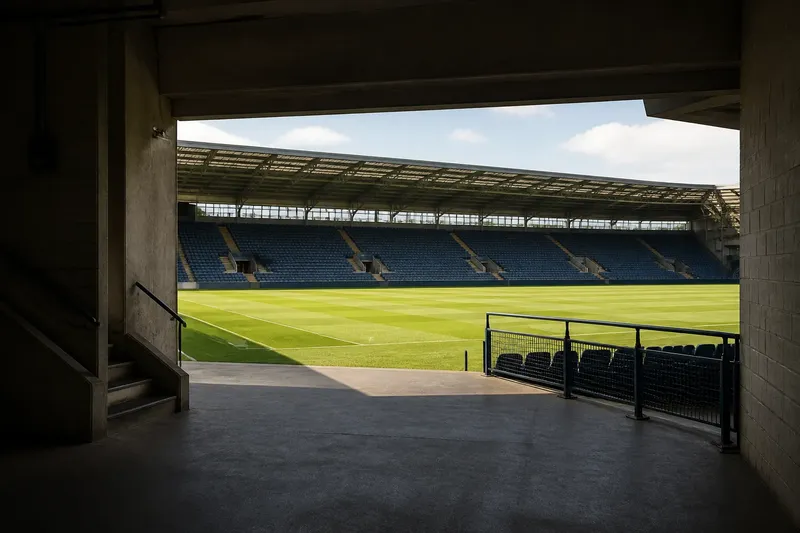
You step through an empty stadium entrance and the pitch appears as a bright rectangle beyond a shaded passage. The nearest stand is still hidden. That partial view is a useful place to begin: an empty stadium lets you notice how the building frames space before people, flags and match-day movement compete for attention.
Rather than asking whether the ground feels large or intimate, follow one simple thread: what changes in your view as you move from entrance to bowl? A few deliberate comparisons can reveal how structure, light and seating shape scale, without turning a passing impression into a verdict on the whole venue.
Start with a view
Pause at a public entrance or concourse where you are permitted to stand. Note what is visible, what is concealed and what draws your eye. A low ceiling beside a bright opening can make the next space feel especially open; a broad, unobstructed entrance may create a calmer transition.
Keep the description concrete. “The roof edge is hidden from here” gives you something to check from another position. “The stadium is impressive” does not. You need only record a few linked details: your location, the direction you face, the main feature in view and the condition of the light.
Read the structure
As you follow an ordinary public route, notice how columns, beams, stair openings and the underside of the stand frame the bowl. A support may interrupt the field of view; a long roof edge can draw the eye across the seating. Look at these parts in relation to one another rather than trying to judge each in isolation.
Repeated seat rows create horizontal bands, while aisles and vomitories cut through them. In an empty stand, those interruptions are easy to see. They explain the visual organisation of the seating, but they do not by themselves tell you how people move through the building on an event day. Stay within public areas and leave access or safety assessments to venue staff and qualified professionals.
When you reach a place where the bowl is visible, turn back towards the entrance. The entrance may now look like a small opening held within a larger structure. This change in direction helps distinguish the building’s visible layers from the expectation built up during the approach.
Watch the light
Notice which surfaces catch daylight and which remain in shade. Sun on seat backs can make one section stand out; a dark soffit beneath the roof can make the structure appear deeper. Glazing may reflect the bowl and soften the boundary between inside and outside. These are conditions of a particular visit, not permanent features of the view.
If you use a phone camera, note where you stood and which way you faced. A wide-angle lens can stretch the apparent distance between foreground and background, so treat the image as a memory aid rather than a neutral record of scale. A brief written note about light and framing often explains more than another photograph.
Compare stand views
From a public viewpoint overlooking the field, compare how the stands meet the roof and how their outlines continue around the bowl. A continuous sweep reads differently from a stand divided by stair openings or changes in height. Seat colour matters too: a single colour can make rows appear calm and unified, while contrasting blocks make the pattern more noticeable.
The pitch is a familiar reference, but it can dominate your attention. Look briefly at the stands without focusing on the field, then look at the whole bowl again. The first view brings out seat rhythm and roof form; the second shows how those elements sit in relation to the playing surface.
Questions about scale?
Why can an empty stadium feel larger?
Unoccupied seats reveal uninterrupted rows, stair aisles and more of the structure. Long sightlines or a shaded roof can add a sense of depth, though the effect depends on where you stand and how the light falls.
What should I note during a visit?
Record your position, the direction you face, one visible structural feature and the light condition. If a second viewpoint changes the impression, note what moved into view or disappeared rather than forcing both observations into one judgement.
Does a phone photo show the scale accurately?
Not necessarily: a wide-angle setting can make nearby and distant parts seem farther apart. Use the photo to recall the scene, and keep a note of your position so you can interpret its framing later.
Can I visit areas beyond the public route?
Only enter spaces that the venue has opened to visitors, and follow its directions. A visual walk is not a reason to cross barriers or assess restricted infrastructure.
Keep a compact record
A short record is more useful than a long inventory. Use these checks to decide what to note next:
- If the entrance reveals only part of the bowl, note what blocks the view; if the bowl is already open to sight, note which feature first draws your eye instead.
- If the roof edge is visible, describe its direction against the seating; if it is concealed, record what hides it and compare from a permitted viewpoint.
- If a column interrupts your view, note which part of the field or stand disappears; if no support interrupts it, record the uninterrupted span as the contrast.
- If sunlight picks out a seat section, note which rows and surfaces are bright; if the area is evenly shaded, describe the softer contrast and avoid treating it as a different layout.
- If stair openings break the seat rows, note where the pattern changes; if the rows appear continuous, check whether the openings are simply outside your current view.
- If a photograph exaggerates the roof or distance, keep it only as a visual prompt and rely on your written position note; if the framing seems natural, still record the lens setting or camera view for context.
Say you are visiting an invented community stadium on a quiet open day. At the entrance, you can see the bright pitch but not the roof edge; you write down “partial bowl, shaded threshold”. From a public concourse, you can then see the roof line and a run of sunlit seats, so you add “roof visible, light on near stand”. The resulting account is not that the stadium changed size: it shows that the first view concealed features that the second revealed, while the light made one section stand out.
Leave with a distinction
An empty stadium is easiest to read when you keep observation separate from interpretation. “The shadow makes the roof seem deeper” describes a visual effect; it does not claim that every visitor will experience the same scale. That distinction makes your notes more useful if you return at another time or compare the bowl from a different public viewpoint.
For a first look around an empty stadium, the most valuable record may be the difference between two views, not a single description of the building. If you revisit, return to the same permitted position under different light or with the stands occupied. You can then see which impressions belong to the architecture and which depend on the moment.